Indicator Highlight: Coral Reefs
- Anonymous
- |
- |
- 25 Comments
Introduction
Did you know that corals are animals? Some people might think they are rocks or plants, but they are actually animals that are related to jellyfish. Coral individuals (called polyps) live together to form colonies. You can think of a coral colony like an apartment building, where every apartment is an individual coral polyp. Corals build their skeletons and create the ocean habitat known as coral reefs. Coral reefs are critically important ocean habitats because they are home to many other ocean animals. For this reason, coral reefs are often referred to as the “rainforests of the sea.” This is why NOAA is working with partners to study and restore reefs.
What are Coral Reefs?
While there are different types of corals, hard corals (as opposed to soft corals) form the basis of the reef structure that creates reef habitat. As such, a common metric to track coral reef ecosystem health over time is percent coral cover. In other words, how much of a given part of the reef is covered by hard corals. Higher coral cover is generally better than low coral cover. Another metric that coral scientists use to track reef ecosystem health over time is macroalgae cover, or how much of a given part of the reef is covered by macroalgae. Higher macroalgae cover is generally considered to be worse than lower macroalgae cover. These metrics are measured by scientists who visit the same parts of a reef over time to see how much coral cover and macroalgae cover have changed.
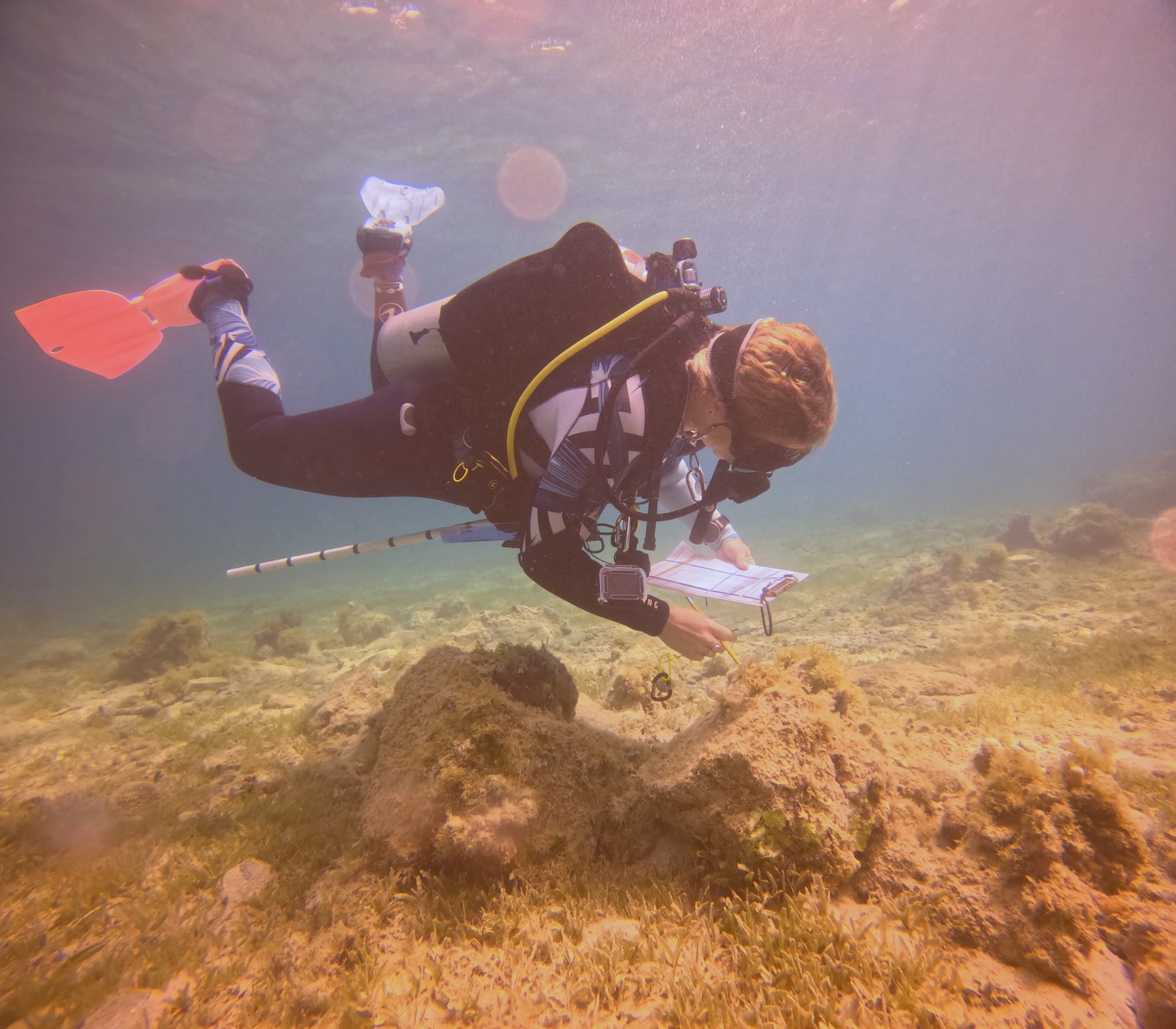
A scuba diver hovers above coral and macroalgae while training during the summer 2025 National Coral Reef Monitoring Program's mission to the U.S. Virgin Islands. Image Credit: NCRMP
While a healthy ecosystem can have a balance of both coral and macroalgae cover, a strong indicator of a declining ecosystem is one where coral cover is going down while macroalgae cover is going up. This is because macroalgae can overgrow corals and outcompete them for space and resources. The combination of coral cover and macroalgae cover is a good way to assess the status and trends of coral reef areas, although there are many other indicators of reef health and function.
When looking at coral and macroalgae cover, context is important. Coral reefs in the Atlantic and Pacific basins are fundamentally different. Coral cover is typically higher on Pacific reefs than Atlantic reefs primarily because the Indo-Pacific region is where coral reefs first evolved, so there are more coral species in the Pacific than the Atlantic. That means that scientists must consider separate baselines for each basin matter. For example, a coral cover value of 10% could be considered healthy for the Atlantic, whereas a coral cover of 25% could be considered healthy for the Pacific. Coral cover that is declining over time, no matter what their baseline was, indicates a system that is stressed, especially when coupled with increasing macroalgae cover over the same time period. Conversely, reefs with stable or increasing coral cover and stable or even decreasing macroalgae cover could indicate a healthy coral reef ecosystem. Some additional environmental factors that may affect coral and macroalgae coverage are sea surface temperature, marine heatwaves, ocean chemistry, or physical trauma.
How Do Reefs Affect Species and Ecosystems?
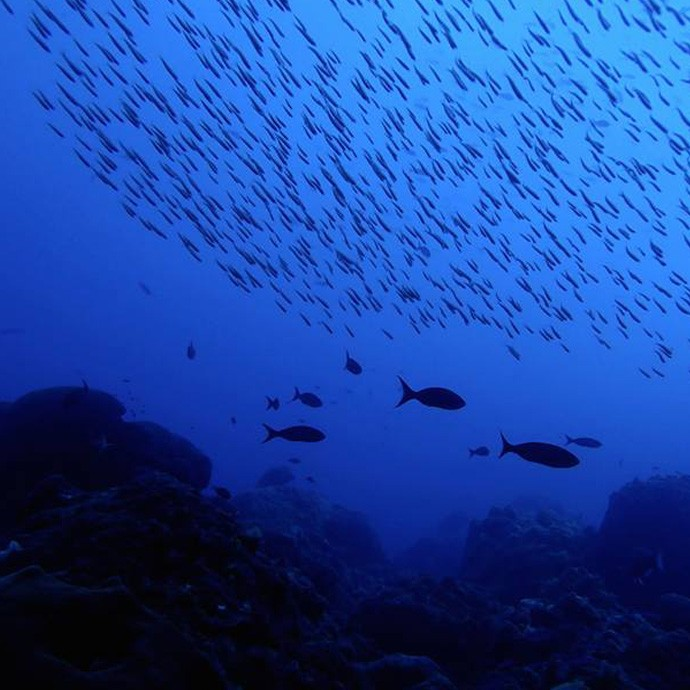
Schools of fish glide over a reef in the Flower Garden Banks National Marine Sanctuary. Image credit: NOAA
Healthy coral reef ecosystems are critically important because they provide a home for countless other marine organisms - think fish, sharks, sea fans, sponges, conchs, urchins, lobsters, turtles, octopus, eels, and more. Reefs serve as nurseries, providing nooks and crannies that act as hiding spots from predators for a variety of animals before they spend their life in the open ocean. A macroalgae-dominated reef doesn’t provide the same level of structural complexity necessary for hiding from predators as a coral-dominated reef.
Reefs are also home to important filter feeders, like sponges, that filter toxins and contaminants out of the oceans, and support large amounts of plant life that take in carbon dioxide and release oxygen. Coral reefs are able to support diverse ecosystems, filter the water, and create oxygen when they have clean and clear water to support them.
Coral reefs also play a role in building beaches. Much of the sand on beaches near coral reefs is made of broken-down coral skeletons. Some reef creatures actually produce sand as a result of consuming corals. For example, parrotfish bite and scrape algae off of rocks and dead corals, grind up the inedible calcium-carbonate of the coral skeletons in their guts, and then excrete it as sand. Parrotfish can produce hundreds of pounds of white sand each year.
How Could Reefs Affect Me?
Coral-dominated reefs also provide a variety of ecosystem services that benefit coastal and inland communities. Firstly, healthy coral reefs provide sustainable fisheries and food security to millions of people, particularly people living on islands where agriculture is limited. In these places, the major source of protein for people is fish from the reefs. Additionally, healthy coral reefs support the ecotourism industry for snorkeling, diving, and more.
Coral reefs can also lessen the amount of storm surge during tropical storms and hurricanes, which reduces wave action and flooding-related damage to the coast. However, those benefits are due to the structural complexity of reefs, and decrease if the reef is macroalgal-dominated.
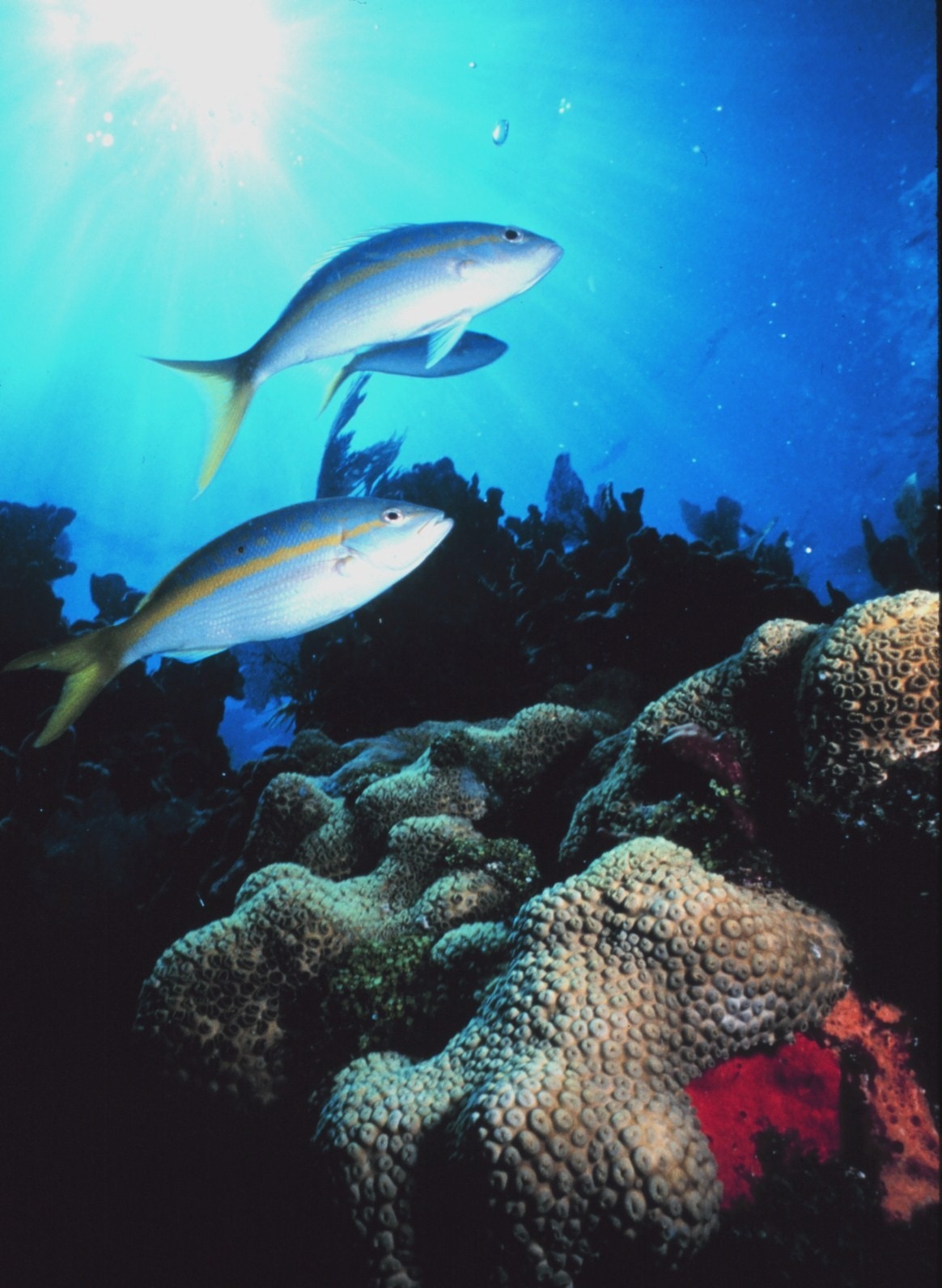
Snapper swimming over coral reefs in Florida Keys National Marine Sanctuary. Image Credit: NOAA
Coral reefs are also a source of marine biopharmaceuticals with promising cancer-fighting drugs being tested everyday. Therefore, healthy coral reefs provide a wealth of potential resources for future medical advances for humankind.
Read more:
Land-Sea Impacts on Hawaiian Coral Reefs
Nice video on importance of reefs but not very meaty with info
USGS report on economic value of coral reefs in US re: coastal storm damage